
Introduction
The phrase commanders vs chiefs can refer to an interesting comparison between two leadership roles, but it can also be used when discussing teams, organizations, military structures, or other competitive contexts. Because the words “commander” and “chief” are sometimes used interchangeably, people often wonder whether they actually mean the same thing. The answer depends heavily on the setting in which the terms are used.
Understanding the difference becomes much easier when you look at what each title represents, who holds the authority, and what responsibilities come with the position.
What Is Commanders vs Chiefs?
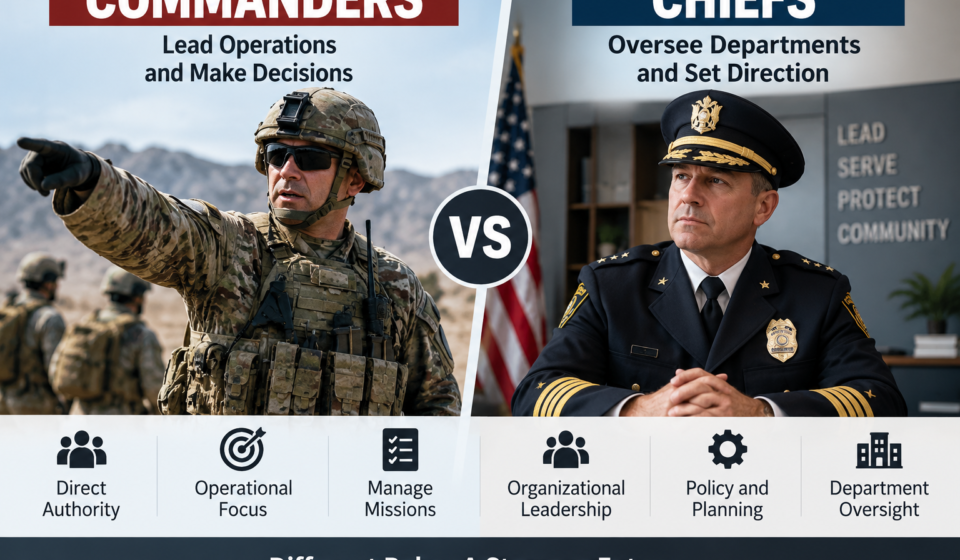
At its simplest, commanders vs chiefs is a comparison between two types of leadership titles. A commander generally refers to someone who has direct authority over a particular group, unit, operation, or organization. The word emphasizes command, responsibility, and decision-making.
A chief, on the other hand, usually refers to a person who leads a department, organization, community, or professional area. The title can have a broad meaning and may describe someone responsible for setting direction, managing people, or overseeing a specific function.
The exact difference is not universal. In military and government organizations, the titles can have formal meanings. In business or everyday conversation, they may simply describe senior leadership positions.
Is Commanders vs Chiefs Easy to Understand?
The comparison is fairly easy to understand once the context is clear. The biggest challenge is that neither word has one fixed meaning across every organization.
For example, a commander may have authority over personnel and operations within a defined unit. A chief might oversee an entire department or serve as the senior official in a particular area. In some organizations, however, a chief may also be a commander, while a commander may report to a chief.
This means you should always look at the organization’s structure rather than assuming that one title is automatically higher than the other.
Main Differences Between Commanders and Chiefs
Authority and Responsibility
One of the clearest differences is the type of authority associated with each role. A commander is commonly associated with direct operational control. Their responsibilities can include making decisions, assigning duties, managing resources, and ensuring that a group carries out its objectives.
A chief often has broader administrative or organizational responsibilities. Depending on the institution, a chief may establish policies, manage a department, supervise senior staff, and represent the organization.
Leadership Structure
Commanders usually operate within a defined chain of command. Their position determines who they report to and who reports to them. This structure is particularly important in organizations where clear authority is necessary.
Chiefs can also work within a hierarchy, but their role may focus more on overall management or departmental leadership. In some cases, a chief sits at the top of a specific branch while commanders manage smaller groups underneath that structure.
Decision-Making
Commanders are often expected to make decisions related to immediate operations. They may need to respond quickly when circumstances change and take responsibility for the results of those decisions.
Chiefs may concentrate more on long-term planning, policy, personnel, and organizational priorities. Their decisions can affect a wider area, although this depends on the specific organization.
Use of the Titles
The words are used differently depending on the field. “Commander” is strongly associated with military, naval, aviation, law-enforcement, and other command-based structures. “Chief” is much broader and can appear in police departments, government agencies, businesses, professional organizations, and community leadership.
Because of this, comparing the two titles without context can sometimes be misleading.
Why Do People Compare Commanders and Chiefs?
Understanding Leadership Roles
People often compare these titles because they want to understand who has authority and what each person is responsible for. Knowing the organizational structure makes it easier to understand why different leadership titles exist.
Comparing Organizational Power
The comparison can also help explain how authority is distributed. A commander might have substantial control over a particular operation without being the highest-ranking person in an organization. Similarly, a chief may have a senior title but still delegate operational responsibilities to commanders or other managers.
Understanding Different Institutions
Different institutions develop their own terminology. A title that represents senior leadership in one organization may describe a different position somewhere else. Looking at the actual responsibilities is therefore more useful than judging a role solely by its name.
Is Commanders vs Chiefs Reliable as a Comparison?
The comparison itself is useful, but it should not be treated as a universal ranking system. There is no general rule saying that every chief outranks every commander or vice versa.
For accurate information, readers should check the official organizational structure, job descriptions, regulations, or other trusted sources connected with the institution being discussed. This is especially important when the titles have legal, military, or governmental significance.
Important Tips for Understanding the Difference
When you come across the terms commander and chief, consider the context first. Ask what organization is being discussed, what responsibilities each position has, and who each person reports to.
It is also useful to distinguish between a title and actual authority. Two people may have different titles while having similar levels of responsibility, or they may have similar-sounding titles while holding very different positions.
Avoid assuming that a title automatically tells you everything about someone’s rank or influence. The organization’s official hierarchy is the best source for understanding the relationship.
Final Thoughts
The commanders vs chiefs comparison is ultimately about understanding different approaches to leadership and authority. Commanders are commonly connected with direct command and operational responsibility, while chiefs often have broader departmental, administrative, or organizational leadership duties.
However, the exact meaning of either title depends on the institution. If you want to know who has greater authority, the safest approach is to examine the specific organization’s hierarchy rather than relying on the title alone. Understanding that context makes the difference between commanders and chiefs much clearer for beginners and experienced readers alike.