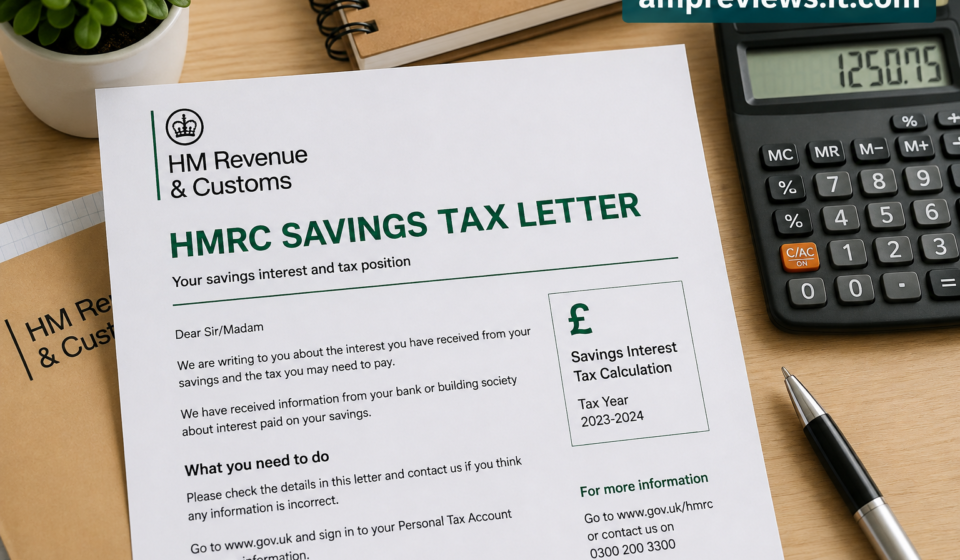

Receiving an HMRC savings tax letter can be confusing, especially if you were not expecting a message from HM Revenue & Customs. These letters are generally connected with interest earned on savings and the amount of tax HMRC believes may be due. Understanding why you received one, what information it contains, and what action may be required can make the situation much easier to handle.
This guide explains the HMRC savings tax letter in straightforward language and covers the key points savers should know.
What Is an HMRC Savings Tax Letter?
An HMRC savings tax letter is a communication from HM Revenue & Customs (HMRC) about your savings interest and possible income tax responsibilities.
Banks and building societies can provide information to HMRC about interest paid on accounts. HMRC may use this information, along with other income details, to work out whether you have paid the correct amount of tax.
It is important to remember that receiving a letter does not automatically mean you have done anything wrong. It may simply be HMRC informing you about information it has received or explaining how your tax position has been calculated.
The amount of tax you may owe depends on your overall income, savings interest, allowances, and other circumstances.
Is an HMRC Savings Tax Letter Easy to Understand?
HMRC letters can sometimes contain formal tax terminology, which makes them difficult to understand at first. The most useful approach is to read the letter carefully and identify exactly what HMRC is asking you to check or do.
Look for details such as the tax year involved, the amount of savings interest HMRC has recorded, and whether the letter says that additional tax may be payable.
The letter should also explain what you need to do next, if anything. If you believe the information is incorrect, do not ignore the letter. Check your bank records and compare the figures before contacting HMRC.
Main Points Covered in an HMRC Savings Tax Letter
Savings Interest Reported to HMRC
One of the main reasons for receiving correspondence about savings tax is that HMRC has received information about interest paid to you.
Interest from ordinary savings accounts can be taxable, although various allowances may mean that you do not actually have tax to pay on all of it. HMRC considers your wider tax position rather than looking at savings interest completely on its own.
Personal Savings Allowance
The Personal Savings Allowance is an important part of understanding savings tax.
Depending on your income tax position, you may be able to receive a certain amount of savings interest without paying tax on it. The applicable allowance can differ depending on whether you are a basic-rate, higher-rate, or additional-rate taxpayer.
Because tax rules can change and individual circumstances vary, it is sensible to check the current HMRC guidance when dealing with a letter.
Tax Already Paid or Adjusted
An HMRC letter may also explain whether tax has already been collected or whether HMRC intends to make an adjustment.
For people who pay tax through PAYE, HMRC may sometimes adjust their tax code to collect an amount that it believes is due. However, the exact process depends on the person’s circumstances and the information available to HMRC.
Tax-Free Savings Accounts
Not all savings interest is treated in the same way. For example, interest from an Individual Savings Account (ISA) is generally tax-free when the account qualifies under the ISA rules.
If your HMRC letter appears to include an amount that you believe relates to tax-free savings, check the account details carefully. Keeping statements and records can help you identify where the reported figures came from.
Why Do People Receive an HMRC Savings Tax Letter?
HMRC Has Received New Information
Banks and building societies can report interest information to HMRC. If the information changes HMRC’s understanding of your income, you may receive a letter explaining the updated position.
This does not necessarily indicate a problem. It may simply be part of HMRC’s process for keeping tax records up to date.
Your Savings Interest Has Changed
Savings rates and account balances can change during the year. As a result, the amount of interest you receive may be higher than in previous years.
Someone who previously had little taxable savings interest could therefore find that their tax position has changed.
Your Overall Income Has Changed
Savings tax cannot always be considered separately from other income. A change in salary, pension, or other taxable income may affect which tax rates and allowances apply to your savings interest.
This is one reason why two people with the same amount of savings interest may have different tax outcomes.
Is an HMRC Savings Tax Letter Safe and Reliable?
If you receive a genuine letter from HMRC, it is important to take it seriously. However, you should also be cautious about scams pretending to be HMRC.
Do not provide passwords, banking login information, card PINs, or security codes simply because a message claims to be from HMRC. If you receive an unexpected email or text asking for sensitive information, verify it independently through the official GOV.UK website rather than following suspicious links.
For tax-related questions, using HMRC’s official contact and online services is safer than relying on unofficial websites or social media advice.
Important Tips When You Receive the Letter
First, check the tax year mentioned in the correspondence. Then compare the savings interest figure with your bank or building society statements.
If something appears wrong, gather the relevant documents before contacting HMRC. This can make it easier to explain the issue and provide evidence.
You should also avoid automatically paying an amount simply because it appears in a letter. First understand whether HMRC is asking for payment, informing you of a change, requesting information, or simply explaining your tax position.
If the situation is complicated, particularly where you have several sources of income or multiple savings accounts, professional tax advice may be worthwhile.
Most importantly, do not ignore official tax correspondence. Even when you believe the figures are incorrect, responding promptly can help prevent unnecessary complications.
Final Thoughts
An HMRC savings tax letter is usually about how savings interest fits into your wider tax position. Receiving one does not automatically mean you have made a mistake or that a large payment is due.
The best approach is to check the tax year, review the savings interest HMRC has recorded, consider applicable allowances, and compare the information with your own financial records. If anything does not look right, contact HMRC through its official channels and ask for clarification.
Tax rules can depend on individual circumstances, so avoid relying on assumptions based on someone else’s situation. A careful review of the letter and accurate financial records are the simplest ways to understand what it means and what you should do next.